A solid video content marketing strategy is more than just hitting record. It's your complete playbook for creating, sharing, and measuring video to hit specific business goals, whether that’s building brand awareness or driving actual sales. It means really knowing your audience, nailing down your core messages, and building a system to turn your long-form videos into a steady stream of clips for every platform. This way, every video has a job to do and contributes to real, measurable growth.
Why Video Is Non-Negotiable for Growth
Let's be clear: video has moved from the "nice-to-have" column to being a fundamental engine for business growth. It's not just another content format anymore; it's how most people prefer to learn, connect with brands, and ultimately decide what to buy. Sitting this one out is like willingly leaving a huge chunk of your audience on the table.
This isn't just a gut feeling—the data is overwhelming. Video is on track to make up an incredible 82% of all internet traffic. This isn't a fad; it’s a seismic shift in how we consume information. And businesses are seeing the results. A full 95% of video marketers now consider it essential to their strategy, reporting an 87% jump in brand awareness directly because of it.
Capturing Attention in a Crowded Market
In a world of infinite scroll, attention is the scarcest resource we have. Video is hands-down the best tool for earning it. Unlike a static blog post or a picture, video layers visuals, sound, and movement to create an experience that sticks with people and connects on an emotional level.
For a practical example, imagine a B2B SaaS company trying to explain a powerful but complex new feature. They could write a 2,000-word deep dive, or they could produce a sharp, 90-second animated explainer. Which one do you think is more likely to hold someone's attention and get the point across? The video, every time.
A well-crafted video can communicate your brand's personality, build genuine trust, and explain your value proposition in two minutes more effectively than a webpage can in ten. It's the closest you can get to a face-to-face conversation, but at scale.
This is where a smart repurposing workflow becomes your superpower. Instead of getting stuck on the content treadmill, you start with one great piece of "pillar" content—like a webinar, a customer interview, or a podcast—and slice it into dozens of high-impact assets.
This system is a game-changer because it helps you:
- Stay Consistent: Your core message gets reinforced everywhere, without sounding repetitive.
- Be Incredibly Efficient: One recording session can fuel your content calendar for a month.
- Win on Every Platform: You can create custom-fit clips for TikTok, LinkedIn, Instagram Reels, and anywhere else your audience hangs out.
Focusing on repurposing builds a sustainable content machine that powers your entire video strategy without burning out your team. Our guide on how to create high-impact short-form content is the perfect place to start. It’s all about creating a scalable system where every single video works harder for you.
Laying the Foundation for a Winning Video Strategy
A great video strategy doesn't start with a camera; it starts with a plan. Before you even think about scripts, lighting, or hitting "record," you need a crystal-clear idea of what you want your videos to accomplish. Without a purpose, you're just making noise, and that's a surefire way to waste time and money.
This isn't just a "nice-to-have" anymore. Video has become table stakes. In fact, business adoption is at an all-time high, with a staggering 91% of businesses now using video as a key marketing tool. It’s no surprise, considering 96% of marketers say it's a critical part of their strategy because it delivers a real, measurable return.
What’s the Point? Defining Your Core Video Goals
Your video goals need to be a direct reflection of your business objectives. Are you trying to get your name out there and build brand awareness? Or is the focus on generating more qualified leads? Maybe you need to keep your current customers happy and improve retention. Each of these goals demands a completely different kind of video.
Let's get practical. A SaaS company that needs to generate high-quality leads might build its entire strategy around a comprehensive product demo webinar. That long-form video becomes their "pillar" content. On the other hand, a consulting firm trying to build a reputation as the go-to expert in their field might create a series of in-depth interviews with industry leaders.
The most effective video strategies are built on a foundation of clear, measurable goals. Without a target, you're just creating content for content's sake, which is an expensive and inefficient way to operate.
If you're just getting started, thinking through these five essential tips for your video marketing campaign will help you build a solid framework from day one.
Getting Inside Your Audience's Head
Once you know why you're making videos, you need to figure out who you're making them for. This is where you have to go deeper than surface-level demographics. Creating detailed buyer personas is non-negotiable. You need to understand their real-world pain points, what drives them, and where they hang out online.
- What are their burning questions? You can use tools like AnswerThePublic or browse relevant subreddits and Quora forums. For example, if you sell project management software, you might find questions like "how to manage a remote team effectively," which is a perfect topic for a video.
- Where do they watch video? Are they on TikTok and Instagram, scrolling through quick, snappy Reels for tips? Or are they on YouTube, looking for deep-dive tutorials that solve a complex problem?
- What kind of style connects with them? Does your audience expect a polished, corporate video, or would they respond better to something more raw, authentic, and behind-the-scenes?
When you nail these details, your videos feel like they were made just for them. That's how you build real connection and trust.
Mapping Your Videos to the Marketing Funnel
A truly strategic approach means mapping specific video types to each stage of the buyer's journey. You want to deliver the right message at the right time, guiding people from "who are you?" to "take my money!" Every single video should have a job to do in moving your audience along that path.
Here’s a simple way to think about it:
| Funnel Stage | Content Goal | A Real-World Video Example |
|---|---|---|
| Top of Funnel (ToFu) | Grab attention and build awareness. | A short, educational "how-to" clip on social media that solves one tiny, common industry problem. |
| Middle of Funnel (MoFu) | Nurture interest and showcase your solution. | A detailed webinar or a case study video featuring a customer explaining how they solved their problem with your product. |
| Bottom of Funnel (BoFu) | Drive a decision and convert the lead. | A handful of authentic video testimonials from happy clients or a personalized product demo sent directly to a prospect. |
By aligning your video production with the customer journey, you create a cohesive experience that builds momentum. This is how you move away from random acts of video and turn your content into a reliable engine for growth.
Scaling Production with AI-Powered Repurposing
Let’s be honest. The biggest hurdle in video marketing isn’t coming up with great ideas—it’s the crushing amount of time and resources it takes to produce everything. One high-quality video can feel like a monumental project. Trying to keep up a consistent schedule? That’s where the old production model completely falls apart.
The only way to win is to work smarter, not harder. This means shifting your mindset from creating one-off videos to building a system around repurposing. You start with one cornerstone piece of content—a detailed webinar, a podcast interview, a deep-dive demo—and treat it like a goldmine. From that single asset, you can extract weeks, sometimes even a month's worth of content. This isn't just about saving a few bucks; it's about getting 10x the impact from the same amount of effort.
From Manual Grind to an Automated Content Engine
I’ve seen teams spend days trying to turn a one-hour webinar into a few social media clips. The traditional process is a soul-crushing grind. An editor has to sit through the entire recording, hunt for good soundbites, manually snip out every "uh" and "um," and then painstakingly add branded captions. It’s easily a full day's work for just a handful of usable clips.
This is where AI-powered platforms change the entire game. For example, an advanced AI can use active speaker detection to instantly identify who is talking and when, making it easy to find those great back-and-forth moments without scrubbing through the timeline for an hour.
Before you even hit record, though, your strategy needs to be locked in. What are you trying to achieve? Who are you talking to?
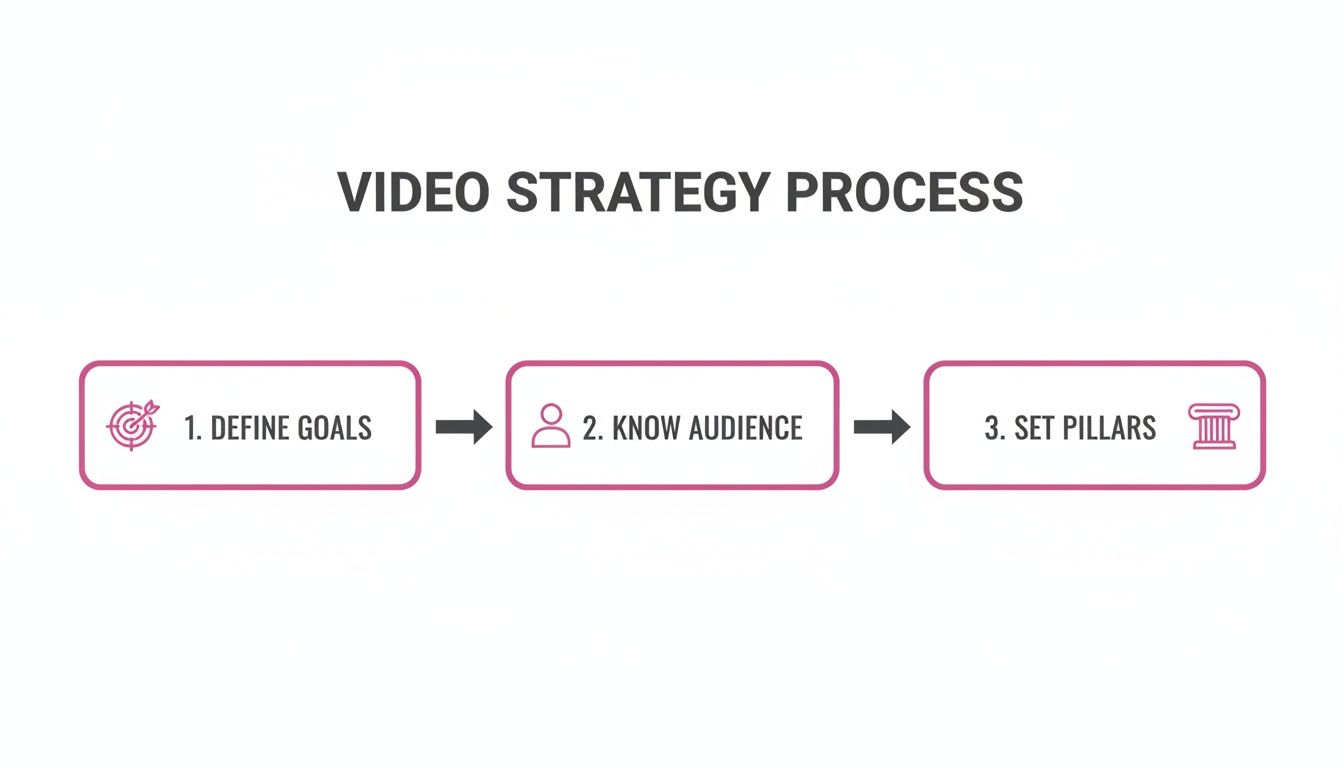
Having this clarity upfront ensures every clip you create, no matter how short, is pushing toward the same goal.
The Power of Smart, Automated Editing
One of the features that feels like pure magic is automated filler word removal. With one click, the AI zips through the audio and cleans out all the hesitations and stumbles. The result is a crisp, professional-sounding clip, and it saves what used to be hours of tedious audio work.
Then there are the captions. We all know most social video is watched on mute, so captions aren't optional. An AI-powered Caption Animation Engine lets you create a branded caption style once—your font, your colors, your animation—and apply it to every single clip automatically. No more timing and styling captions by hand for every video.
By automating the most repetitive and time-intensive editing tasks, you free up your team to focus on higher-level strategy and creativity. You shift from being a content factory worker to a content architect.
Think about this practical example: A B2B SaaS company hosts a 60-minute webinar with a respected industry expert. Here’s their new workflow:
- Upload the recording.
- Let the AI generate a transcript and pinpoint the most compelling soundbites.
- Instantly remove all the "ums" and "ahs."
- Apply their pre-set branded template with a logo and animated captions.
- Generate 15-20 unique short clips for social media, all in under an hour.
A full week of an editor’s time is now condensed into less than a lunch break. That massive leap in efficiency is how you build a video strategy that can actually scale. To see exactly how this works, you can check out our guide on how to repurpose long videos into engaging short clips with AI.
Manual Editing vs AI-Powered Repurposing
The difference here isn't just a small improvement; it's a complete overhaul of the production process. When you see the numbers side-by-side, it becomes crystal clear. And remember, this is just one piece of the puzzle—exploring top content repurposing strategies can help you turn that video into blog posts, quote graphics, and more.
Here’s a direct comparison of the time it takes to create 10 short clips from a one-hour video.
| Task | Manual Workflow (Estimated Time) | AI-Powered Workflow (Estimated Time) | Our Edge |
|---|---|---|---|
| Clip Identification | 1-2 hours | 5-10 minutes | AI automatically suggests compelling moments, eliminating manual review. |
| Rough Cutting | 2-3 hours | 10-15 minutes | Simple drag-and-drop or transcript-based editing replaces timeline scrubbing. |
| Audio Cleanup | 1-2 hours | < 1 minute | One-click filler word removal handles a tedious and time-consuming task instantly. |
| Captioning & Styling | 2-3 hours | 5 minutes | AI generates and styles captions based on a pre-set brand template. |
| Exporting Clips | 30 minutes | 10 minutes | Batch processing allows multiple clips to be rendered simultaneously. |
| Total Time | ~8 hours | ~30 minutes | Frees up nearly a full workday, allowing for a 10x increase in content output with the same resources. |
The math doesn't lie. Any team still stuck in the manual editing loop is in a linear game—more content requires more time and more money, plain and simple. An AI-first approach breaks you out of that trap. You can finally achieve a volume and consistency of content that was once impossible for anyone but the biggest brands.
Mastering Multi-Platform Video Distribution
So you’ve built a library of fantastic video clips. That’s a huge win, but honestly, it’s only half the job. Without a smart distribution plan, even the most brilliant content will just sit there, failing to deliver any real results. The real magic of a video content marketing strategy happens when you get those videos in front of the right eyeballs on the platforms they actually use.
This isn't about mindlessly blasting the same clip across every channel. Effective distribution is about understanding the unique culture of each platform and showing up in a way that feels natural. The goal is to build a cohesive, almost automated machine that squeezes every drop of value out of each video you create.
Tailoring Your Content for Each Platform
The secret to winning on social media is treating each channel like its own country with its own language and customs. A one-size-fits-all approach is a fast track to being ignored. What crushes it on LinkedIn will almost certainly fall flat on TikTok, and a viral Instagram Reel might not land the same way on YouTube Shorts.
Think about it like this: you wouldn't wear the same outfit to a black-tie gala that you'd wear to a backyard barbecue. Your content needs to dress for the occasion, too.
Let's use a practical example. Say you have a killer soundbite from a podcast about the future of AI in marketing. Here’s how you could spin it for different audiences:
- LinkedIn: The clip needs to feel professional and insightful. You'd probably add a clean text overlay with a key statistic and write a caption that poses a thoughtful question to get industry folks talking.
- Instagram Reels: Here, it's all about grabbing attention fast. You could use the same audio but pair it with dynamic B-roll footage and flashy animated captions that pop off the screen.
- TikTok: This platform is all about trends and feeling authentic. You’d take that same core message but maybe set it to a trending audio clip, add a popular filter, and make it feel like it truly belongs on the "For You" page.
- YouTube Shorts: Shorts often do well with quick, educational content. Your clip could be framed as a simple "quick tip," delivering one valuable nugget of information that viewers can immediately grasp.
The most successful brands don't just post content on a platform; they create content for the platform. This subtle shift in mindset makes all the difference between being an annoying outsider and becoming a welcome part of the community.
The Technical Side of Platform Nuances
Adapting your content goes way beyond just the vibe and style—the technical specs are just as critical. Every platform has its own preferred video dimensions, or aspect ratio. Getting this wrong makes your brand look sloppy and cripples your video's performance before it even has a chance.
A horizontal 16:9 video looks great on YouTube, but if you upload it directly to a vertical platform like TikTok, it gets awkwardly cropped and loses all its power.
This is why having a streamlined way to resize your videos is non-negotiable. You need a process to quickly reformat clips to 9:16 for Reels and TikTok, 1:1 for a LinkedIn feed post, or whatever the platform demands. For a deep dive, our guide on how to change the aspect ratio of a video breaks down how to get it right every time.
Automating Your Distribution for Maximum Efficiency
Let’s be real: manually posting every single clip to multiple platforms, every single day, is a recipe for burnout. This is where automation and scheduling tools become your best friends. They turn distribution from a frantic daily chore into a calm, strategic process.
By scheduling content in advance, you can maintain a consistent posting cadence, which social media algorithms absolutely love. This consistency builds anticipation with your audience and keeps your brand top-of-mind. It’s no surprise that 90% of social media marketers say that building an active online community is vital for success—and you can't build a community without showing up consistently.
Modern tools go far beyond basic scheduling. You can connect your social accounts and push repurposed clips straight into your content calendar from an integrated dashboard. This eliminates hours of downloading, uploading, and jumping between tabs.
For a practical example, a marketing agency juggling multiple clients can use this kind of integrated workflow to batch-produce and schedule an entire month of content for several accounts in just one afternoon. This frees up their team to focus on what really matters: strategy, engaging with the community, and analyzing what’s working. It transforms distribution from a logistical headache into a scalable system that drives predictable growth.
Measuring Video Performance to Prove ROI

Here's a hard truth: creating great video is only half the battle. If you can't prove its value in a language the rest of the business understands—return on investment (ROI)—you’ll constantly struggle to justify your budget. A truly successful video content marketing strategy is built on data, not just gut feelings.
It’s time to move beyond vanity metrics like view count. We need to connect the dots between a video's performance and real business outcomes, like generating leads and closing sales.
Aligning KPIs with Your Marketing Funnel
The metrics that matter most depend entirely on what you want a specific video to achieve. You wouldn't judge a top-of-funnel brand awareness clip by the number of deals it closed, right? In the same way, a bottom-of-funnel demo video isn't meant to get a million views.
The key is to match your KPIs to the customer's journey. It’s the only way to tell an accurate story about your video's impact.
From Awareness to Attention
At the top of the funnel, it's all about reach and engagement. Your goal is simple: get your brand in front of as many relevant eyeballs as possible and see if the message sticks.
Look closely at these numbers:
- Impressions and Reach: How many times did your video appear in a feed, and how many unique people actually saw it?
- Watch Time and Audience Retention: This is a big one. How long are people actually watching? A high retention rate is a clear sign that your content is genuinely interesting.
When these metrics are strong, you know you’re successfully capturing attention in a very noisy world. That's the critical first step.
Tracking Consideration and Conversion
As people move down the funnel, your focus needs to shift from grabbing attention to inspiring action. For your middle-of-funnel content, you’re looking for signals that viewers are turning from passive watchers into active prospects.
The most powerful video analytics tell a story. They show you exactly where a viewer's interest peaked, where it dropped off, and what action they took next. This isn't just data; it's a direct feedback loop for making your next video even better.
At this stage, your dashboard should highlight metrics that show deeper engagement:
- Click-Through Rate (CTR): What percentage of viewers clicked on your call-to-action? For example, if you include a link to a whitepaper in your YouTube video description, the CTR tells you how compelling your offer was.
- Comments and Shares: These aren't just for show. They mean your content is sparking conversations and people are willing to put their name behind it.
Finally, at the bottom of the funnel, it’s all about the money. This is where your video efforts directly translate into business results and where you prove your ROI to stakeholders.
The metrics to obsess over here are:
- Lead Form Submissions: How many people filled out a contact form after watching a webinar or a product demo?
- Sales Attributed to Video: Using UTM parameters or CRM data to directly link a sale back to a specific video is the ultimate win.
To make sense of it all, it's crucial to look at the right metrics at the right time. Here’s a simple breakdown of the KPIs that matter most at each stage of the journey.
Essential Video Marketing KPIs by Funnel Stage
| Funnel Stage | Primary KPI | Secondary KPIs | What It Measures |
|---|---|---|---|
| Top of Funnel (Awareness) | Audience Retention | Impressions, Reach, Watch Time | How well your video captures and holds audience attention. |
| Middle of Funnel (Consideration) | Click-Through Rate (CTR) | Comments, Shares, Website Traffic | How effectively your video drives viewers to take the next step. |
| Bottom of Funnel (Conversion) | Conversion Rate (e.g., Sales, Sign-ups) | Lead Form Submissions, Demo Requests | The video's direct impact on generating leads and revenue. |
Tracking these KPIs in a simple dashboard doesn’t have to be complicated. But by organizing your data this way, you can instantly see what’s working, prove your value, and make smarter decisions about where to invest your time and money next.
Answering Your Top Video Strategy Questions
Even the best-laid plans run into real-world questions. I get these all the time from teams trying to scale their video efforts. Let's break down some of the most common hurdles you'll face and give you some practical advice to clear them.
"How Do I Keep My Brand Consistent Across Dozens of Clips?"
This is a massive—and valid—concern. When you're pumping out tons of repurposed clips, it’s easy for things to look chaotic. The secret isn't just slapping a logo on everything; it's about establishing a brand preset before you even think about hitting "record."
Think of it as your video content's uniform. A smart platform will let you lock in your specific brand fonts, color hex codes, and even your preferred caption animation style. Once you set it up, every single clip you generate automatically inherits that look.
This way, a video on your LinkedIn feed has the same professional polish as a Reel on Instagram. You get instant brand recognition without any mind-numbing manual edits.
Consistency is the bedrock of trust. When your audience sees a cohesive visual style everywhere, it screams professionalism. It’s a subtle cue that reinforces brand recall and makes your content feel authoritative.
"What’s the Ideal Length for a Video on Each Platform?"
There's no single golden rule, but there are definitely strong guidelines based on what works. People have completely different expectations and attention spans depending on which app they're scrolling through. Your video's length needs to match the platform's vibe to have any chance of stopping the scroll.
Here’s a simple cheat sheet I give to my clients:
- TikTok & Instagram Reels: Keep it tight—aim for 15-45 seconds. These platforms are all about quick, high-impact hits.
- YouTube Shorts: You can go up to 60 seconds, but I’ve found the retention sweet spot is usually between 30-50 seconds.
- LinkedIn: Your audience here is in a more professional mindset and will tolerate longer content. Videos between 1-2 minutes tend to do really well for sharing insights or quick explainers.
"How Can I Start a Video Strategy with a Limited Budget?"
You don't need a massive production budget to get in the game. Honestly, some of today's most viral content is refreshingly authentic and low-fi. Don't forget, over 17% of marketers now say short-form video delivers the best results for their business, and you can get started for next to nothing.
The most powerful, budget-friendly strategy is to go all-in on repurposing.
Instead of trying to fund a dozen different video shoots, pour your resources into creating just one high-quality, long-form video each month. This could be a webinar, a podcast interview, or an in-depth Q&A—all of which can be recorded with a decent webcam and microphone.
From that one recording, you can easily pull a whole month's worth of short-form clips. This approach demolishes your production costs while giving you a massive library of content. All you really need to build a powerful video engine is your smartphone, a good mic, and a smart repurposing tool.
Ready to build a scalable video content strategy without the massive time investment? Transform your long-form content into dozens of high-impact, ready-to-post clips in minutes, not hours. See how our AI-powered features can 10x your video output by visiting https://swiftia.io.