If you want to create social media content that actually works, you have to stop thinking about algorithms and start thinking about people. The secret isn't just posting—it's posting with a clear purpose that helps your audience. You need to move beyond generic updates and start telling compelling stories that genuinely solve problems, educate, or entertain. That’s how you turn passive scrollers into a real community.
Moving Beyond Content That Gets Ignored

Let's be honest, most social media content feels like shouting into the void. It’s no wonder when you consider there are over 5 billion active users scrolling every single day. It’s incredibly easy for your posts, no matter how well-intentioned, to get completely buried.
Too many brands fall into the trap of just filling the calendar. They post for the sake of posting, and the result is content that lacks any real soul or purpose. It doesn’t connect, so it gets ignored.
This usually happens when the strategy is all about chasing the latest algorithm trend instead of building a real connection. Sure, that trending dance might get you a quick burst of views, but does it actually fit your brand? Does it serve your audience? If not, the engagement you get will be shallow and disappear as quickly as it came.
The Shift from Generic to Compelling
True engagement isn't about likes. It's about sparking actual conversations, getting people to hit that "save" button, and building a loyal following that trusts you. To get there, you have to stop broadcasting at people and start providing real, tangible value.
A practical example is a local coffee shop struggling with a predictable Instagram feed of latte art photos. Their engagement was flat. They shifted their strategy by posting behind-the-scenes clips of baristas practicing their craft, tutorials on brewing better coffee at home, and polls asking customers to vote on the next seasonal drink.
Overnight, their feed went from a boring menu to a hub for coffee lovers. Engagement shot through the roof because they stopped just selling coffee and started sharing their passion for it. For more on these kinds of tactics, you should check out our guide on how to increase social media engagement.
Key Takeaway: Your best content doesn’t just show what you sell. It shows why you care and gives your audience a reason to care right alongside you.
Contrasting Old vs. New Strategies
To really nail this, you have to consciously leave the old, ineffective tactics behind. Here’s a quick breakdown of what to stop doing and what to start doing to get results that actually move the needle.
| Outdated Tactic | Modern Strategy |
|---|---|
| Posting without a clear purpose | Creating content that educates, entertains, or inspires |
| Chasing every viral trend | Aligning content with brand values and audience interests |
| Focusing only on self-promotion | Building community through two-way conversations and Q&As |
| Ignoring analytics and feedback | Using data to refine topics and optimize for what works |
Building Your Content Strategy on Audience Insights
Great social media content doesn’t happen by accident. It's built on a bedrock of understanding the very people you want to reach. Before you even dream of hitting the record button or drafting a caption, you have to go beyond basic demographics and get into what really makes your audience tick. This groundwork is what makes every post feel relevant and valuable.
A winning strategy always begins with listening. Social listening—tuning into the online chatter about your brand, your industry, and your competitors—is where you find raw, unfiltered opinions and spot content gaps.
A practical example is a skincare brand that dives into Reddit forums and discovers its ideal customers are overwhelmed by complex ingredient lists. That single insight is pure gold. It could spark a whole content series—like simple, visual carousels that break down product labels, building serious trust and authority.
Going Deeper Than Demographics
Knowing your audience's age and location is just the start. The real magic happens when you tailor content to their specific interests and pain points. In fact, a HubSpot report showed that 88% of marketers say a deeper understanding of their audience is critical for creating effective campaigns. To get there, you need to create detailed audience personas that feel like actual people.
A solid persona should include:
- Goals & Motivations: What are they trying to accomplish where your product or service could genuinely help?
- Pain Points & Frustrations: What specific problems are keeping them up at night?
- Preferred Content Formats: Do they binge-watch quick, educational Reels? Or do they prefer in-depth text posts and interactive Q&As?
- Online Hangouts: Where do they spend their time? Is it niche Facebook Groups, specific subreddits, or following certain creators on TikTok?
When you can articulate your customer's problem better than they can, they will automatically assume you have a solution. This is the core of creating content that truly connects.
Analyzing Competitor Content for Gaps
Once you have a solid grasp on your audience, it's time to see what your competitors are up to. The goal here isn't to copy them—it's to analyze their strategy to find your own unique angle.
Are they only posting glossy, perfect product shots? Great. That's your cue to share authentic, behind-the-scenes content or user-generated photos to build a more human connection. Are their captions bland and corporate? That's your chance to write compelling copy that actually starts a conversation and showcases your brand's personality.
This process shines a light on all the opportunities for you to become the go-to resource in your space. By answering the questions and addressing the needs your competitors are ignoring, you build a community that trusts you. To make sure your own efforts are built on a solid foundation, check out how one creator managed to fix your social media content strategy and saw incredible results. This is how you stop guessing and start creating content that stands out.
Crafting a Scroll-Stopping Hook and Narrative

In the blink-and-you'll-miss-it world of social feeds, you're not fighting for minutes of attention—you're fighting for seconds. Think about it: research from Nielsen shows the average person gives a piece of content just 2.5 seconds before their thumb decides its fate. Your first job isn’t to tell your story; it's to make them stop scrolling long enough to hear it.
A killer hook is a pattern interrupt. It’s the jolt that breaks someone out of the hypnotic scroll by being unexpected, controversial, or just plain intriguing. Without that initial grab, even the most brilliant message is just another post they fly past.
Nailing this opener is the absolute bedrock of figuring out how to create engaging social media content. Your audience is bombarded, and a weak start is an open invitation for them to keep moving.
Mastering the Art of the Hook
The best hooks feel like they're reading your viewer's mind. They poke at a common belief, ask a burning question, or make a bold claim that your audience has to investigate. A hook is a promise that what you're about to share is worth their time.
Here are a few battle-tested hook formulas that work:
- Go against the grain: Start with something like, "Your to-do list is actually making you less productive." It instantly creates tension because it challenges what everyone assumes is true.
- Create an information gap: Ask a direct question like, "Are you making this one mistake with your morning coffee?" The viewer immediately wants to know if they are the one making the mistake.
- Make a bold, definitive statement: "This is the only social media metric that really matters." The authority in that statement makes people lean in, wanting to confirm or challenge it.
Remember, the goal of a hook isn't just to be loud; it's to be magnetic. It should feel like you're starting a conversation the viewer has already been having inside their own head.
Building a Narrative with PAS
Okay, you’ve got their attention. Now what? You need a structure to carry them through your message, and for short-form video, the Problem-Agitation-Solution (PAS) framework is gold. It’s simple, direct, and taps right into human psychology.
The whole idea is built on a simple truth: people are driven more strongly by the desire to avoid pain than to gain pleasure. PAS uses this to its advantage by first pointing out a problem, making that problem feel more real and urgent, and then positioning your message as the welcome relief.
A Quick PAS Example in Action
Let's stick with that productivity idea and map it out for a quick 15-second Reel.
- Problem (the first 3 seconds): The video kicks off with on-screen text: "Your to-do list is making you less productive." The visual is someone looking completely overwhelmed by a long, messy digital to-do list.
- Agitation (the next 7 seconds): Now, we see rapid-fire cuts. A shot of a missed deadline notification. More tasks piling up. The person sighing in frustration. You're dialing up the pain, making the viewer think, "Ugh, that's me."
- Solution (the final 5 seconds): Suddenly, the screen swipes to a clean, minimalist interface showing just three key tasks. The caption reads, "Focus on the 'Big 3' instead." The person in the video now looks relieved and checks off the final item with a smile.
This structure just works. It takes the viewer on a mini-journey from frustration to clarity in the time it takes to tie a shoe, making your point stick.
Choosing the Right Format for Maximum Impact
Your message is only half the battle; how you package it is what truly lands. Everyone's obsessed with short-form video right now, but blindly following that trend is a surefire way to get mediocre results. The real secret to creating social media content that actually works is matching the right format to your specific goal and audience.
Sometimes, a single, powerful static image or a well-designed carousel can do more heavy lifting than a video ever could. The whole "video is always best" myth is starting to crumble under the weight of new data and evolving user habits.
When Static Images Still Win
Despite the endless hype around Reels and TikTok, the numbers tell a surprising story. An analysis of over 5 million posts found that static image posts are currently beating Reels with a 6.2% engagement rate, while short videos trail behind at just 3.5%. You can see the full social media engagement research for the detailed breakdown.
This just goes to show that a strong, well-composed image can still be the best way to stop the scroll and get a clear message across.
This makes static images the perfect choice for specific goals:
- Major Announcements: A bold graphic for a product launch or big news is direct and impossible to miss.
- Powerful Quotes or Testimonials: Text-based images make key messages incredibly easy to read, save, and share.
- Product Showcases: A crisp, high-quality photo can highlight product details with a clarity that a fast-moving video might blur.
A Quick Framework for Picking Your Format
Instead of just defaulting to video, start thinking like a strategist. Your format choice should be a deliberate decision based on what you want to achieve with every single post. Before you create anything, ask yourself these three simple questions.
- What's my primary goal? Am I trying to educate, entertain, start a conversation, or drive sales? Each one of these goals naturally fits a different format.
- What does my audience actually like? Dive into your analytics. Do your followers go crazy for your quick-tip carousels, or do they love your behind-the-scenes Reels? The data doesn't lie.
- What does the platform want? While images are crushing it on Instagram, a platform like TikTok is built from the ground up for video. You always have to play in the platform's native environment.
Key Takeaway: The best format isn't about chasing trends; it's about choosing the most effective tool for the job. Your content's purpose should dictate its presentation, not the other way around.
Content Format Performance by Platform
To give you a clearer picture, here’s how different formats perform across various platforms, based on typical engagement patterns.
| Platform | Top Performing Format | Average Engagement Rate | Best Use Case |
|---|---|---|---|
| Carousel | ~7.0% | Educational content, step-by-step guides, storytelling. | |
| Static Image | ~5.5% | Quick updates, community posts, event announcements. | |
| TikTok | Short-Form Video | ~4.5% | Entertainment, trends, authentic behind-the-scenes looks. |
| Text + Image | ~3.8% | Industry insights, professional advice, company news. |
While these are averages, they highlight a crucial point: you can’t use a one-size-fits-all approach. What works wonders on Instagram might fall completely flat on LinkedIn. Always tailor your format to the platform's culture and what its users expect to see.
Putting It All Together
Let's walk through a practical example. Imagine you're a financial advisor trying to explain a tricky topic like Roth IRAs.
- Goal: Educate your audience.
- Format Options: A quick Reel, a detailed carousel, or a long text post.
A Reel might move too quickly for anyone to absorb the details. A dense text post would likely get scrolled past. A carousel, however, is the perfect fit. You can break down the information into simple, swipeable slides with clear headings and easy-to-understand graphics.
This strategic choice directly serves the user’s need for clear, step-by-step information. For a deeper look at optimizing your clips when video is the right choice, check out our guide on creating effective short-form content. By consciously picking your format, you stop just posting content and start engineering engagement.
Creating and Repurposing Video Content Efficiently
Let's be honest, video is a beast. It's fantastic for connecting with an audience, but the thought of filming, editing, and posting constantly can feel completely draining. The great news? You don't need a massive production budget or a full-time video crew to make an impact. The secret is building a smart, sustainable workflow.
Forget the idea that you need to create a brand-new masterpiece for every single post. The most efficient creators live by the "create once, distribute many" model. This is all about taking one core piece of long-form content—like a webinar or a podcast—and strategically slicing it up into a ton of smaller assets. It maximizes your effort and keeps your content calendar full.
Small Tweaks for Big Production Value
You can level up your video quality right now with just your smartphone and a few simple adjustments. These little details send a powerful signal to viewers that your content is professional and worth their time.
- Stable Shots: Nothing screams "amateur" like a shaky camera. You don't need fancy gear; a simple phone tripod or even a steady stack of books will do the trick. Keep it still.
- Clear Audio: This one is non-negotiable. People will forgive less-than-perfect visuals, but they will bounce immediately if they can't hear you clearly. A cheap lavalier mic that clips to your shirt is one of the best investments you can make.
- Good Lighting: Forget complex lighting kits. Just find a window and face it. Natural light is your best friend for getting a clean, well-lit shot that looks fantastic.
Before you even hit record, though, think about why you're creating the content in the first place.
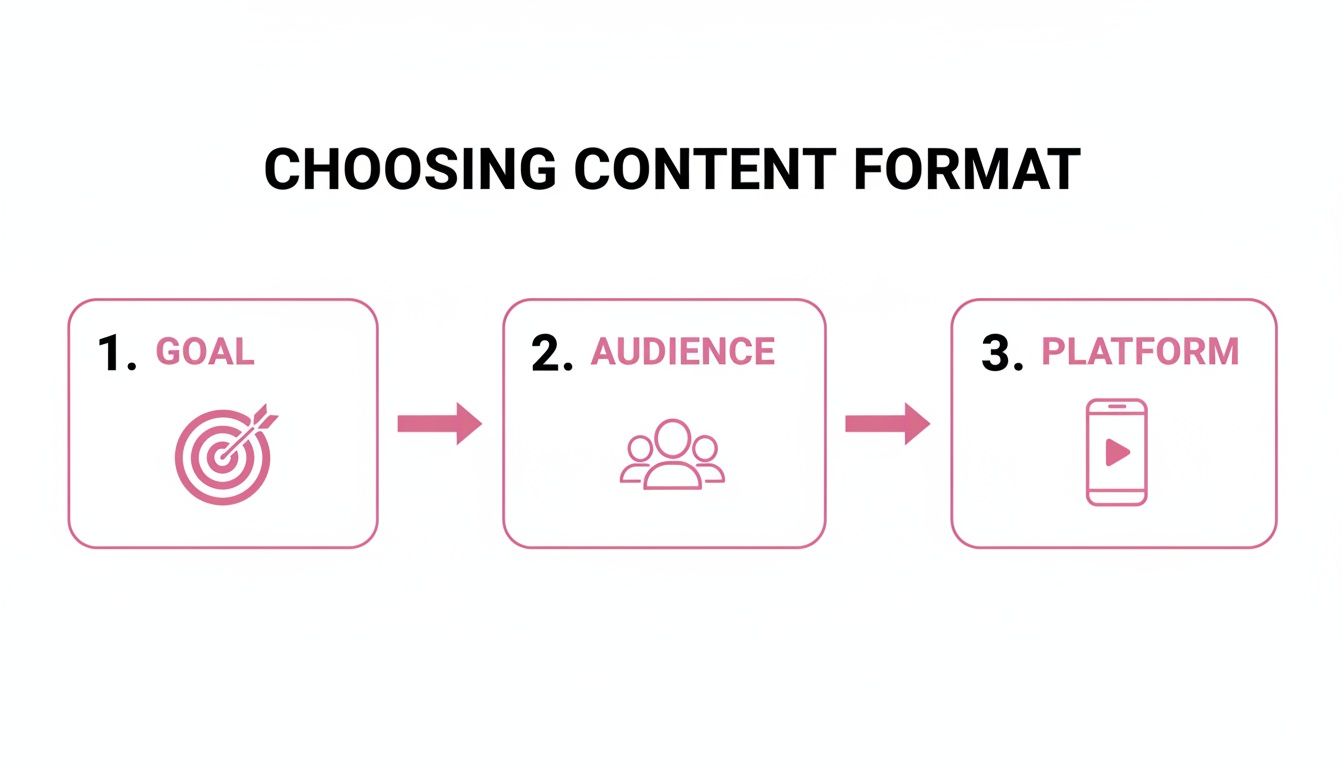
This simple framework keeps you grounded. Always start with your goal, consider who you're talking to, and then pick the platform that makes the most sense.
The Art of Content Repurposing
This is where the real magic happens. Start thinking of that 30-minute webinar or that in-depth customer interview as a content goldmine, not just a single video. From that one recording, you can pull out dozens of short, powerful clips that are perfect for Instagram Reels, TikTok, and YouTube Shorts.
The whole point of repurposing is to make your content work harder for you. By turning one long video into ten different assets, you're suddenly showing up consistently across all your channels without having to start from scratch every single day.
To do this effectively, you need to get to the raw material of your video: the text. Being able to transcribe video into text is a game-changer for this process.
Once you have that transcript, you can quickly scan for the best quotes to turn into graphics, pinpoint the most compelling soundbites for audiograms, or find the perfect 60-second story to build a short clip around. For a deeper dive, you can explore some more content repurposing strategies.
By combining these simple production habits with a smart repurposing system, you build a sustainable engine that churns out engaging video content without burning you out.
Writing Captions and Measuring What Matters
A great video will stop the scroll, but it's the caption that makes people stay. Think of your caption as the bridge between a viewer's passive glance and a genuine connection. It’s your chance to provide context, spark a conversation, and turn a fleeting impression into a memorable interaction.
It’s easy to pour all your energy into the visual and treat the caption as an afterthought, but that’s a huge mistake. The right words can skyrocket your saves, shares, and comments. In fact, a recent Sprout Social report showed that engagement metrics like comments and shares are the top KPI for 79% of marketers. That tells you everything you need to know: what you write is just as important as what you show.
Crafting Captions That Connect
The most effective captions don't just describe what's happening in the video; they add a whole new layer of value. They give your audience a reason to pause, think, and engage. So, let’s move beyond generic one-liners and start a real dialogue.
A simple framework to follow is to lead with a strong hook, pack the middle with value, and finish with a clear call to action.
- Hook Them Immediately: Start with a provocative question or a bold statement. A practical example for a fitness coach posting a workout video would be: "Think you need a full hour at the gym? Here’s how to get real results in just 20 minutes." It's far more compelling than "New workout!"
- Offer Clear Value: Use bullet points or short, scannable paragraphs to share tips, a quick personal story, or useful information. This makes your caption easy to digest and gives people a reason to hit that "save" button for later.
- Drive the Conversation: End with a specific question. "What do you think?" is too broad. Ask something that’s easy to answer, like, "What's the one exercise you never skip on a busy day? Drop it in the comments!"
Measuring What Truly Matters
Let's be honest—likes are mostly for vanity. They feel good, but they don't tell you if your content actually helped someone or if your message landed. To get a real sense of your performance, you need to dig deeper into metrics that signal genuine interest and intent.
Focus on metrics that show your audience is taking action. A 'save' means your content was so useful that someone wants to revisit it. A 'share' means it was so good they wanted to attach their name to it and show it to others. These are the signs of a strong content strategy.
Instead of obsessing over likes, start a simple monthly review focused on these core indicators. This is how you stop guessing and start making smart decisions.
| Metric | What It Tells You | Why It Matters |
|---|---|---|
| Saves | Your content is a valuable resource. | This shows you're creating evergreen content your audience finds useful. |
| Shares | Your content was compelling enough to endorse. | A massive indicator of brand advocacy and organic reach. |
| Comment Sentiment | The tone of the conversations you're starting. | Reveals if you're building a positive, engaged community. |
| Profile Visits | Your post made someone curious to learn more. | Measures how well your content drives interest in your brand. |
Tracking these numbers month-over-month will give you incredible clarity. You'll quickly spot which topics, formats, and caption styles are actually working, allowing you to double down on what your audience loves and refine your strategy for even better results.
Got Questions? We’ve Got Answers.
When you're first diving into creating social media content, a lot of questions pop up. It's totally normal. Getting straight, practical answers is the fastest way to build a content strategy that actually gets results. Let's tackle a couple of the most common ones we hear.
"Seriously, How Often Should I Be Posting?"
Everyone wants a magic number, but the real answer is all about consistency, not just frequency. A solid goal for most brands starting out is 3-5 quality posts per week.
This approach keeps you top-of-mind without flooding your followers' feeds. A practical example is a local coffee shop sharing a "Meet the Barista" reel on Monday, a quick tip for brewing at home on Wednesday, and a mouth-watering shot of their new seasonal latte on Friday. The key is to watch your analytics and see when your specific audience is most active and engaged.
"How Do I Actually Find Trending Sounds and Topics?"
You have to be a user of the platform. Seriously. Your best research tool is your own thumb. Spend time scrolling your TikTok "For You" page or the Instagram Reels tab. It's the most authentic, real-time trend report you'll ever get.
Pro Tip: Look for patterns. If you hear the same audio clip or see a similar video format pop up three or more times in a ten-minute scroll, that’s your signal. It’s a trend on the rise, and it’s time to think about how you can put your own spin on it.
For a more data-driven approach, check out TikTok's Creative Center. It gives you a behind-the-scenes look at what’s genuinely trending. Also, keep an eye on the big-name creators in your space—they're often the ones setting the trends that your audience will be excited to see.
Ready to turn your long-form videos into a library of engaging clips? AI can help you create high-impact shorts for TikTok, Reels, and Shorts up to 10x faster. Start creating with Swiftia today.